
Guide
Remodel or repair an older home?
The choice is rarely about taste. It is about what is wrong, what is hidden and what order the work has to happen in.
The short answer
Whether to remodel or repair an older home depends on what is failing and where. If the problem is a worn surface, repair or refresh. If it is a system inside the walls, such as plumbing, wiring or framing, fix that first, and that usually means opening things up, which is what makes it a remodel. Repairing the surface over a failing system only delays the cost.
The right answer for a house depends on its age, its history and its condition, not on a rule. Houses across the East Bay range from long-settled neighborhoods to recent subdivisions, and each needs its own look.
Start with a condition check
Before deciding anything, find out what you have. Go through the house in this order, because problems higher on the list cause damage lower down:
- Roof and drainage. Water getting in ruins everything it touches.
- Foundation and crawlspace. Look for moisture, movement, pests and damaged framing.
- Plumbing. Supply lines, drain lines and shutoff valves. Look for stains, slow drains and low pressure.
- Electrical. Panel capacity, wiring condition and enough outlets for how you live now.
- Heating, cooling and insulation. Comfort problems often come from the envelope as much as the equipment.
- Finishes. Floors, walls, cabinets, windows and doors come last.
A licensed contractor can walk the house with you and say which of these needs attention. For specialist concerns, such as structural movement, a separate inspection may be worth having.
Hidden conditions in older houses
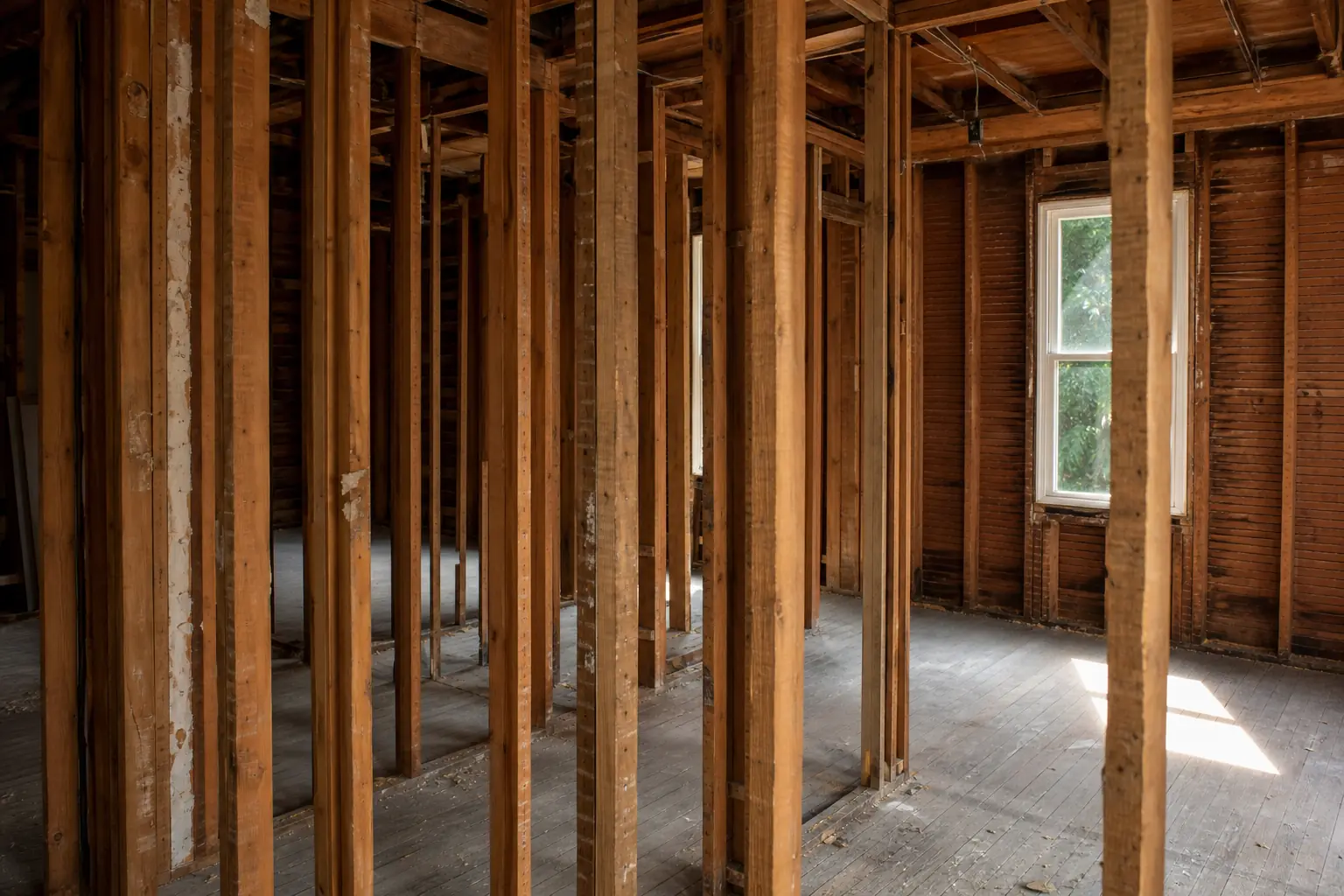
Older houses hide more because more has happened to them. Previous owners add rooms, move walls and patch wiring. Materials that were standard then are not now. Common finds include aging supply or drain piping, outdated wiring, damaged framing from past leaks, insufficient insulation and unpermitted earlier work.
Houses from certain eras can also contain materials that need testing and special handling before they are disturbed. Ask about this before demolition is scheduled.
None of this is a reason not to renovate. It is a reason to ask how the estimate deals with the unknown. We cover that in what is included in a remodeling estimate, and the price effects in whole house renovation cost factors.
When repair is the right call
- The system or structure is sound and the problem is local, like one leak or one failed section.
- You like the layout and the problem is wear.
- Opening the walls would not reach the cause.
- You plan to sell soon and want to fix what a buyer or inspector would flag.
A repair is not a lesser job. Done well, it keeps a good house working. The mistake is repairing something over and over that is at the end of its life.
When a remodel makes more sense
- The same area has needed repair several times.
- You are already opening walls for one reason, so the additional work is cheaper to do now than to come back for later.
- The layout no longer fits how you live, and the repairs would lock in the old layout.
- Multiple systems are approaching the end of their life together.
The logic is sequence. Work behind the walls comes first, then finishes. If you refinish a room and later open its walls, you pay for the finish twice.
The middle path: partial remodel or refresh
Between repair and a full renovation are two options. A refresh changes paint, flooring, lighting, hardware and fixtures without opening walls. It is a good choice when the bones are sound and the complaint is appearance. A partial remodel does the full job in the rooms that need it, often the kitchen and bathrooms, and leaves the rest alone.
Whichever you choose, plan what comes later so that today's work does not get in the way of it. A kitchen done first, with its wiring and plumbing upgraded, makes a later whole-house phase simpler.
Permits and older work
Opening a wall can also reveal earlier work done without a permit. How that is handled depends on the city and on the work, so raise it early with your contractor. See do renovations need permits for how permitting generally works.
How we approach it
N. Abeyta Remodels is licensed and insured and based in Brentwood. We look at the house first and give a straight opinion on whether repair, a refresh or a remodel fits, even when that is the smaller job. See our remodeling and general contractor pages for how one team handles the trades, or contact us for a free estimate.
Older homes: questions
How do I know if I should remodel or repair an older home?
Start with the condition of the systems and structure, not the looks. If plumbing, wiring or framing are failing, repairing the surface only hides the problem. If they are sound and the issue is style or layout, a lighter refresh may be enough.
What should be inspected before deciding?
The roof and drainage, the foundation and crawlspace, the plumbing supply and drains, the electrical panel and wiring, the heating and cooling, and any signs of past moisture. A contractor can walk the house with you and point out what to look at.
Is a refresh a real alternative to a remodel?
Yes, when the bones are sound. Paint, flooring, lighting, hardware and fixtures change how a house feels without opening walls. It is a poor choice if it covers over a problem that will return.
Why do older homes have more surprises?
Because past owners made changes, materials and methods have changed over time, and age wears out parts that are hidden. Surprises are normal, which is why a good estimate says how unknowns are handled.
Do I have to update everything at once?
No. A phased plan can fix the systems and structure first, then finishes later. The order matters: do work inside the walls before finishing them, so you do not pay to rebuild new finishes.
Want an honest look at your older home?
Call or send the form and we will set up a walkthrough.