
Electrical services
Electrical contractor in Brentwood, CA
Electrical work for remodels and upgrades, planned with the other trades. N. Abeyta Remodels serves homeowners in Brentwood and across the East Bay.
Electrical work, done as part of the whole job
Looking for an electrical contractor in Brentwood, CA usually means one of two things. You are remodeling and the room needs new wiring, or something in the house no longer keeps up with how you use it. Either way, the wiring sits behind the finishes, so mistakes are expensive to reach later.
N. Abeyta Remodels is a licensed and insured remodeler based in Brentwood. We handle electrical work as one part of a managed project, which means the lighting plan, the outlet layout and the cabinet or tile layout are decided together. One team manages the whole project, so nobody is waiting on someone else to open a wall.
What electrical work usually involves
Most residential electrical work falls into a few groups. Knowing which one you are in helps you ask the right questions.
- New and extended circuitsA new range, a dishwasher, or a bathroom addition often needs its own circuit run from the panel.
- Outlets and switchesAdding outlets where you actually use them, replacing worn devices, and placing switches where a hand finds them.
- LightingRecessed lights, vanity lights, pendants and under-cabinet lighting, each with its own wiring and switching plan.
- Panel and service questionsWhen the panel is full or old, adding load is not just a wiring question. See the section on panels below.
- TroubleshootingTripping breakers, flickering lights and dead outlets have causes we can trace before anything is replaced.
Why electrical planning comes before the finishes
The direct answer: wiring goes in while the walls are open, so the layout has to be settled first. Once drywall is hung and painted, adding a circuit means cutting into finished surfaces and patching them.
That is why we ask about how you live in the room before we draw anything. Where does the coffee maker sit? Which wall does the TV go on? Is there a reading chair that needs a lamp outlet? In a kitchen, the counter outlets, the range, the vent hood, the disposal and the lighting all have to line up with the cabinet plan. In a bathroom, the fan, the vanity lights and the outlet near the sink need to agree with where the mirror and cabinet go.
Older homes add a wrinkle. Wiring behind old walls can be of a different type or condition than modern work expects, and we do not know that until we look. We would rather tell you what we find than guess at the estimate.
Safety devices and why they matter
Two devices come up on nearly every remodel. A GFCI shuts power off fast when current leaks out of the normal path, which matters where water and electricity can meet. An AFCI is designed to detect a type of dangerous arcing in the wiring and shut the circuit off. Both are common in modern work. Which rooms and circuits require them depends on the code edition in force, so we confirm that for each project instead of relying on habit.
Grounding, correctly sized wire, and breakers matched to that wire are the quiet details that separate safe work from work that only looks finished. A wire that is too small for its breaker can overheat inside the wall long before anyone notices.
Panel capacity and the load you are adding
Every circuit you add draws from one panel, and a panel has a limit. A remodel that adds an electric range, a larger refrigerator, a new bathroom or other major loads can push an older panel past what it handles comfortably. The same is true if you plan to add an electric vehicle charger or other large equipment.
Before we promise new circuits, we look at what the panel has now and what you plan to add. If the panel needs work, we tell you early, because that changes the scope and the schedule. Panel changes may involve a permit, an inspection and coordination with the utility, and we confirm those steps for your address before work is scheduled.
The order of the work
- Walk-through and plan. We look at the existing panel and wiring, then mark outlet, switch and light locations with you.
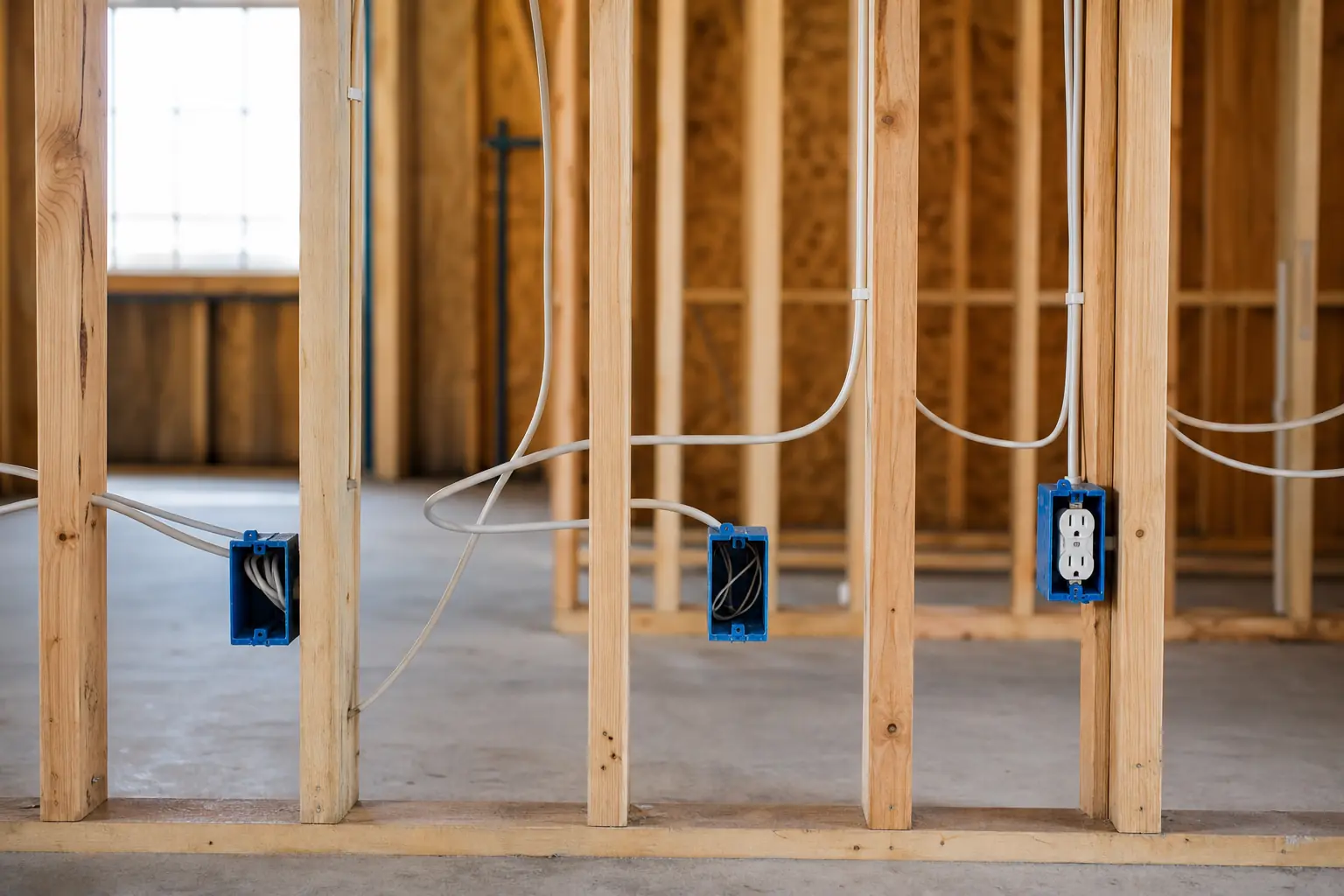
- Rough-in. With walls open, wiring and boxes are run and secured. This is done after framing and plumbing rough-in are set, so the trades do not collide.
- Inspection, where required. Rough work is generally checked before it is covered. Whether and when depends on the permit.
- Drywall and finishes. Walls are closed, finished and painted. Tile and cabinets go in around the boxes.
- Trim-out. Devices, cover plates and fixtures are installed and every circuit is tested.
- Final walkthrough. We go through the room with you and show you what is on each switch and breaker.
What affects cost and schedule
Electrical work varies because every house is different. The things that move the price are the number of circuits and fixtures, how hard the wiring is to reach, the condition of what is already there and whether the panel needs attention. A finished ceiling with no attic access above it is slower than an open wall. Specialty fixtures can add lead time. Inspections affect timing too, since work generally pauses until they are done.
We do not give a number before we have seen the house. At the free estimate we look at the panel and the rooms and give you a written scope you can compare.
Permits and inspections
Electrical work is one of the trades most likely to need a permit and an inspection. The details depend on the work and the city. It depends, and we confirm it for your address. If a permit is needed, we handle the process as part of the project.
Where we work
We do electrical work for homeowners in Brentwood, Oakley, Antioch and Danville, and in the other East Bay towns listed on our service areas page. Electrical work is part of our general contractor services. It connects closely to low voltage lighting, to kitchen and bathroom remodeling and to drywall, which closes up the walls after rough-in.
Electrical work questions
Do I need a permit for electrical work?
Often yes, especially for new circuits, panel changes and moved wiring. A simple like-for-like swap of a switch or fixture is treated differently. Rules vary by city, so we confirm what applies to your address before work starts.
Can you add outlets or circuits to an older home?
Usually, yes. The answer depends on what is already in the walls and how much capacity the panel has left. We open it up, look, and tell you what the job involves before you decide.
Why does my remodel need electrical work at all?
New kitchens and bathrooms add appliances, lighting and outlets that the old wiring may not have been built for. Moving a wall or a fixture also moves the wiring that feeds it.
Do you handle electrical work as part of a kitchen or bathroom remodel?
Yes. The electrical scope is planned with the rest of the remodel so lighting, outlets and circuits are in place before drywall goes up.
What is a GFCI and where is it needed?
A GFCI is a device that shuts power off quickly when current leaks, which is the main danger near water. It is commonly used in kitchens, bathrooms and outdoor areas. We confirm what is required for each room under the code that applies.
What areas do you serve?
Brentwood, Oakley, Antioch, Concord, Pleasant Hill, Walnut Creek, Alamo, Danville, San Ramon, Pleasanton, Livermore, Tracy and Discovery Bay.
Need electrical work done right?
Free estimates for homeowners in Brentwood and the East Bay.