
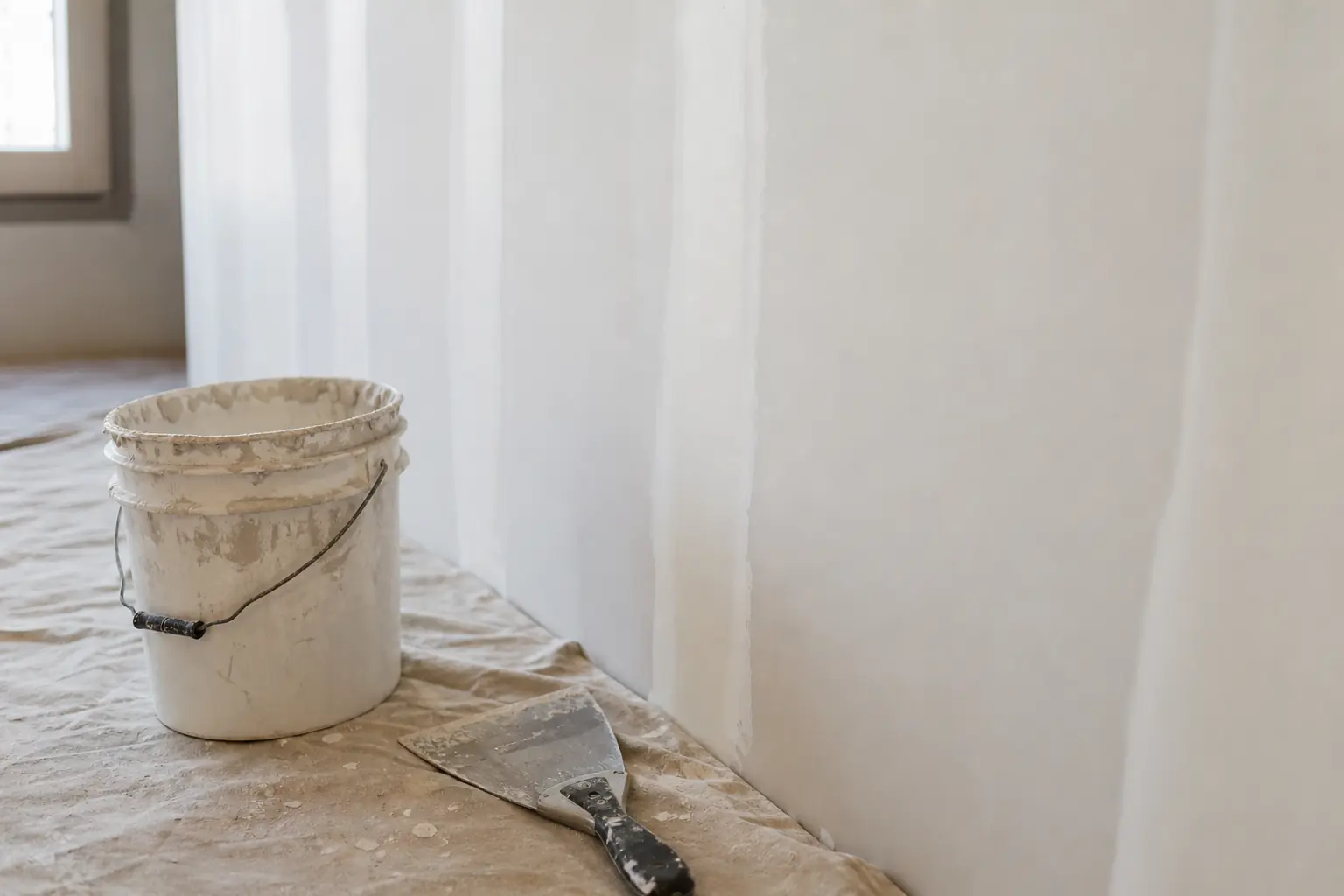
Drywall
Drywall repair in Brentwood, CA
Patches, water damage, cracked ceilings and new walls, finished smooth enough that the paint looks right.
Drywall repair is about the finish you cannot see
Drywall repair in Brentwood is judged by what you cannot see afterward. A good patch disappears under paint. A poor one shows as a ridge, a ring or a different texture, especially when light hits the wall at an angle. Getting there takes the right board, tape and compound, patience between coats and careful sanding.
N. Abeyta Remodels is a licensed and insured remodeler based in Brentwood. We repair drywall as a standalone job and hang and finish it as part of kitchen, bathroom and whole-home remodels.
Hanging, taping, mudding and sanding
New drywall goes through four stages, and each depends on the one before it.
- Hanging. Sheets are cut and screwed to the framing, with joints staggered and edges landing on solid framing. Poorly fastened board pops screws and cracks at seams later.
- Taping. Tape is embedded in compound over each joint and corner. This is what holds the seams together.
- Mudding. Compound is applied in thin, wide coats that are feathered out past the joint. Several thin coats beat one thick coat, which cracks and shrinks.
- Sanding. Dried compound is sanded smooth. Skipping this or rushing it leaves ridges that paint exaggerates.
Drywall finishing is described in levels, from rough taping to a skim coat over the whole surface. A garage wall does not need what a living room wall under glossy paint needs. We match the level of finish to how the wall will be used and painted, and we tell you what we plan before we start. Smooth walls, or walls that will get a glossy sheen, need the most finishing.
Common repairs
- Holes and dentsSmall holes are filled. Larger ones are cut out and patched with new board, taped and blended so the repair is flat with the wall.
- Ceiling cracksCracks at seams and corners are cut open, taped and recoated. If a crack keeps returning, we look at framing movement or a poorly fastened joint.
- Popped screws and nailsThese come from board that was not held tightly to the framing or from the wood drying. They are reset and covered, not just painted over.
- Water damageStained or soft board is cut out well past the visible damage, and the area is allowed to dry before new board goes in.
- Openings from other tradesPlumbing, electrical and window work leave holes. We close and finish them so the repair does not show.
Water damage and what is behind the wall
A brown ring on a ceiling or a soft spot on a wall means water has been there. Before any patch goes up, the source must be found and fixed. It might be a supply line, a drain, a roof leak or a failed seal around a shower or window. Wet board and insulation can grow mold and keep rotting framing wet, so we cut back to dry, sound material and let it dry out.
That is why we say drywall is often the visible end of a bigger question. If the leak is plumbing, we coordinate with plumbing repairs. If it is the roof, see roof services. Patching first and fixing the leak later wastes the repair.
Texture matching
Textured walls and ceilings are harder to repair than smooth ones. The new area has to match the pattern, the thickness and the way the old one reflects light. We study the existing texture, practice the pattern and apply it in thin passes so it blends at the edges. Texture types vary a lot, and a repaired section sometimes needs paint across the whole wall to disappear, because new paint rarely matches old paint exactly. We tell you this up front.
Moisture-resistant board in wet areas
Ordinary drywall absorbs water and breaks down. In bathrooms, laundry rooms and other damp spaces, moisture-resistant board is used where it makes sense, and tiled showers generally need a backer product designed for tile and waterproofing, not standard board. The surface behind tile is what protects the framing for years. Using the wrong board here is how a shower leaks into a wall without anyone noticing. Exact requirements depend on the location and the products used, so we confirm them for each project.
Our bathroom remodeling work treats this layer as part of the waterproofing plan.
How drywall fits with other trades
Drywall sits in the middle of the sequence. Framing, electrical and plumbing rough-ins come first and may need inspection before the walls close. After drywall, priming and painting follow, then tile, cabinets and trim. Fixing drywall after paint or tile is possible but costs more and risks damage to finished surfaces, so we plan the order to finish it once.
Drywall repair is often the cleanup after other work, such as moving an outlet or replacing a window, so we coordinate it with those trades. Related work includes electrical services and building and framing.
What affects the price and the schedule
The size of the repair matters less than its cause and its location. A small patch on a flat wall is quick. A big ceiling, a stairwell, many small repairs, high texture work or water damage with hidden problems takes longer. Compound must dry between coats, so even small jobs take several visits. We look at the walls at the estimate and give you a scope, not a guess.
Permits
Simple repairs do not usually need permits. Work that opens walls for framing, electrical or plumbing changes may require one, and certain walls such as garage walls can have fire-rating requirements. It depends on the project, and we confirm it for your address.
Where we work
We do drywall for homeowners in Brentwood, Oakley, Antioch and Concord, and across the East Bay.
Drywall questions
Can you match my existing wall texture?
Usually, yes. Matching texture takes practice and a look at the existing pattern. Results vary with the texture type and how many coats of paint are on it, and a repaired area often needs paint across the full wall to blend. We explain what to expect before we start.
Is a water stain on the ceiling just cosmetic?
No. A stain means water got in. The source has to be found and fixed first, and wet board and insulation removed. Painting over it hides the stain but not the cause.
Why do cracks keep coming back?
Cracks return when the cause is still there: movement, a loose joint, a missing tape layer or seasonal changes in the framing. We look at why it cracked and repair it so it is less likely to reopen, but we cannot promise a crack will never return.
Does drywall work make a lot of dust?
Sanding does. We seal off the work area, protect floors and clean up, but some fine dust is hard to avoid. It is better to expect it than to be surprised.
What board goes in a bathroom?
Wet areas generally call for moisture-resistant board, and tile showers usually need a backer made for tile, not ordinary board. We choose it by location and confirm the details for your project.
Which areas do you serve?
Brentwood, Oakley, Antioch, Concord, Pleasant Hill, Walnut Creek, Alamo, Danville, San Ramon, Pleasanton, Livermore, Tracy and Discovery Bay.
Need drywall repaired?
Free estimates for homeowners in Brentwood and the East Bay.