
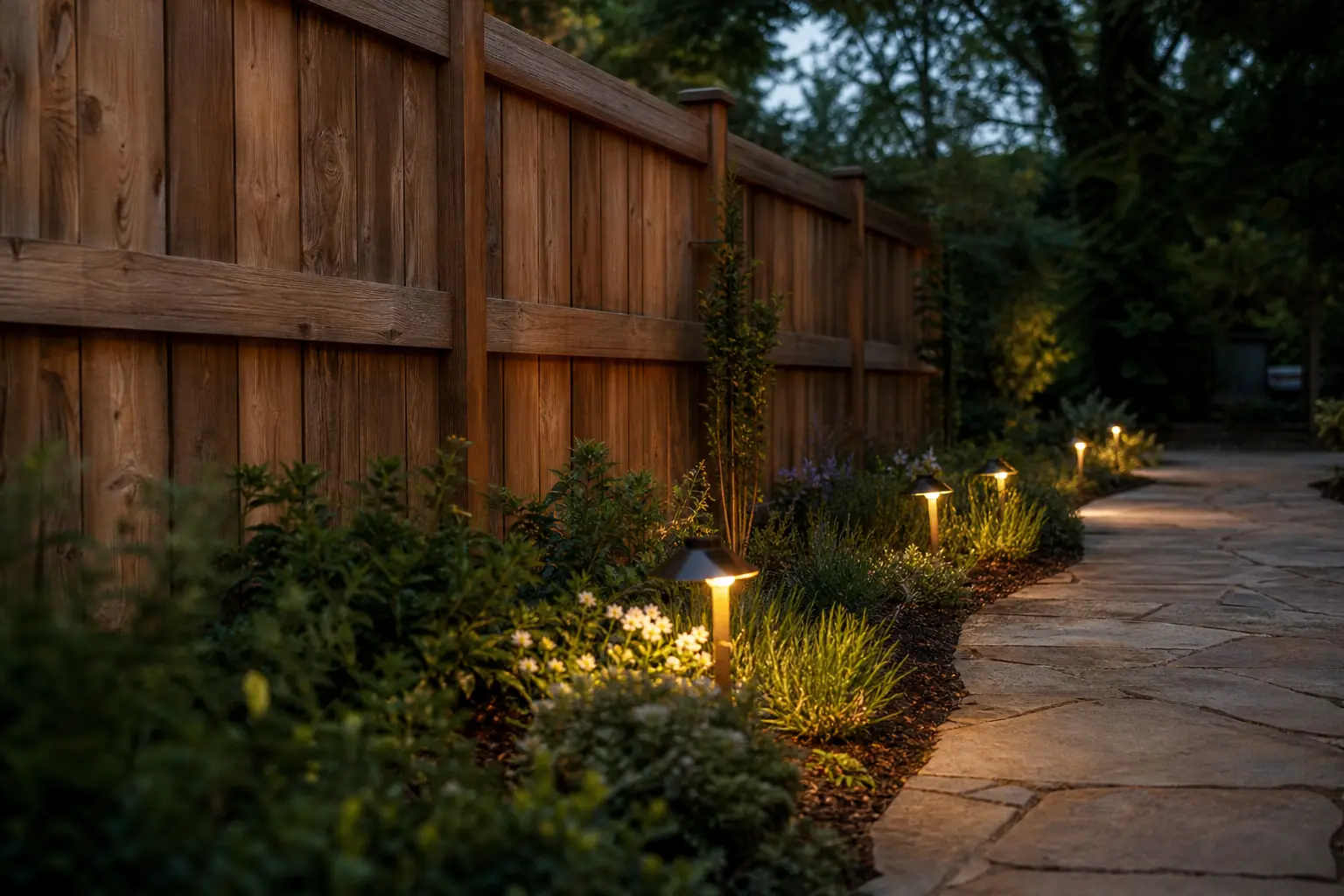
Fencing
Fence installation in Brentwood, CA
N. Abeyta Remodels builds and repairs fences and gates for homeowners in Brentwood and across the East Bay. The part you cannot see, the posts and footings, is where we spend the most care.
What fence installation involves
Fence installation is more than setting boards between posts. It is layout, digging, setting posts in the ground, framing the run, attaching the face, and hanging gates so they swing and latch for years. Most fences that fail early fail at the posts, not the boards.
N. Abeyta Remodels is a licensed and insured remodeler based in Brentwood. We build new fences, replace worn runs, repair sections, and install or fix gates. Estimates are free, and one team manages the project from the first walk of the yard to the final cleanup.
Repair or replace
Repair makes sense when the posts are sound and the damage is limited to boards, rails or hardware. Replacement makes sense when the posts have rotted or loosened. A quick test is to push on a post. If it moves at the base, or the wood is soft where it meets the soil, the fence is on borrowed time.
- Leaning runsA lean can come from loose footings, wind load on a solid fence, or soil that has shifted. We find the cause before deciding on a fix.
- Soft or rotted woodRot starts where wood meets soil or stays wet. Replacing boards on rotted posts only hides the problem for a season.
- Sagging gatesA gate that drags usually has a post that moved or a frame that was never braced. Resetting the post often fixes it.
- Storm damageBroken sections can often be replaced without touching the rest, as long as the neighboring posts are still solid.
Choosing a material
The right material depends on what the fence is for. Privacy, a pool barrier, a place to keep a dog in, and a simple boundary line call for different answers. We compare materials by how they install, how they age and what they need from you.
Wood is the most common choice for privacy. It is easy to repair, and it needs sealing or staining to slow weathering. Vinyl needs little upkeep but has less give if a section is damaged. Metal and chain-link suit boundaries and see-through fences. Each has its own post and fastener requirements, and we plan the framing around the material you pick.
Posts and footings
The posts carry the whole fence, so their depth, spacing and footing matter more than the face. Posts set in concrete resist leaning, and the concrete should shed water away from the wood instead of holding it against the post. Post tops should be finished so water does not sit on the end grain.
Spacing and depth change with fence height, wind exposure and soil. Clay soils, which are common in parts of the East Bay, swell when wet and shrink when dry. That movement can push on footings over the years, which is one reason shortcuts below ground show up later as leaning runs.
Gates
A gate is the hardest-working part of any fence. It swings, takes weight on its hinge side and gets slammed. A good gate has a solid frame, a heavy post on the hinge side, hardware sized for its weight and a latch that lines up even after the seasons shift. We set gate posts first and build the gate to fit the opening as it actually stands.
Property lines, HOA and city rules
Before we build, the line has to be known. A fence on the wrong side of a boundary can become a dispute that costs far more than the fence. A survey or your recorded documents show where the line is, and we build to the line you confirm.
Height limits, setbacks, permit needs and HOA design rules vary by city and by neighborhood. We confirm what applies at your address before work starts. If a shared fence is involved, a conversation with your neighbor first usually saves trouble later.
Drainage and soil movement
Water decides how long a fence lasts. Boards that sit on wet soil rot, and posts in ground that stays soggy rot faster. We keep the bottom of the fence off the ground, and we look at where water runs along the fence line. If grading sends water against a run, fixing the grade can matter as much as the fence itself. That ties into our landscaping work on grading and drainage.
What happens, in order
- Site visit. We walk the line, check the existing fence if there is one, and talk through purpose and style. Estimates are free.
- Scope and approvals. We settle material, height, gates and any approvals that apply to your address.
- Utility check and layout. Underground lines are located before digging, and the line is laid out and marked.
- Demolition if replacing. The old fence comes out and is hauled away.
- Posts, framing and face. Posts are set and allowed to cure, then rails and face go on.
- Gates, finish and walkthrough. Hardware is adjusted, the site is cleaned up and we walk the line with you.
What affects price and schedule
Length, height, material and the number of gates drive the price. Slopes, tree roots, rock, old concrete footings and tight access add work. A replacement includes removal of the old fence. Weather matters too, since concrete needs time to set. We will not quote a figure without seeing the yard, and at the free estimate we give you a scope you can compare.
Where we work
We build fences for homeowners in Brentwood, Oakley, Antioch and Discovery Bay, and throughout the wider East Bay. See the full service area. A new fence often goes with exterior finishes or a larger exterior project, and we can plan them together.
Fence installation questions
Should I repair my fence or replace it?
If the posts are solid and only some boards or rails have failed, repair usually makes sense. If posts are rotted at the base, leaning, or loose in the ground, replacing the run is usually the better choice, because new boards on bad posts will not last. We look at the posts first when we visit.
Who owns the fence between my yard and my neighbor's?
It depends on where the property line sits and how the fence was built. We cannot settle that for you. A survey or your title documents show the line, and it helps to talk with your neighbor before work starts.
Do I need a permit or HOA approval for a new fence?
It depends on the height, location and your neighborhood. We confirm the city and HOA requirements for your address before building, and we ask you to share any HOA guidelines you have.
What fence material is best?
There is no single best material. Wood, vinyl, metal and chain-link each trade off cost, upkeep, privacy and appearance. We walk through how each one installs and ages so you can choose for your yard.
Can you add a gate to an existing fence?
Usually yes. A gate needs stronger posts than a plain fence section, so we often reset or add a post at the opening before hanging the gate.
Which areas do you serve?
Brentwood, Oakley, Antioch, Concord, Pleasant Hill, Walnut Creek, Alamo, Danville, San Ramon, Pleasanton, Livermore, Tracy and Discovery Bay.
Ready to fix or replace your fence?
Free estimates for homeowners in Brentwood and the East Bay.