
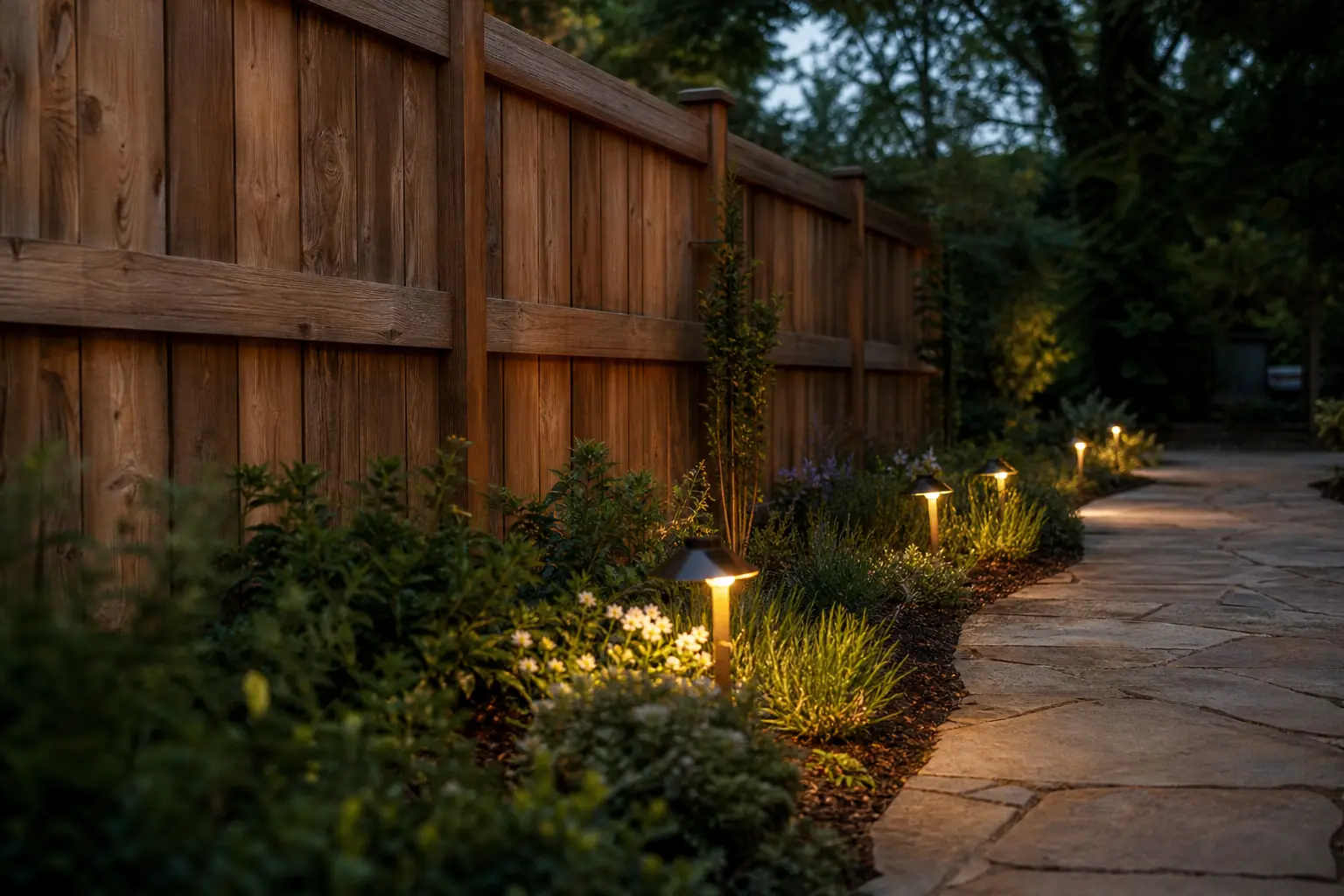
Low voltage lighting
Low voltage lighting installation in Brentwood, CA
Path, patio, landscape and accent lighting that runs on reduced voltage. N. Abeyta Remodels plans the placement and installs the system so it lights evenly and lasts.
How low voltage lighting works
A low voltage lighting system has four parts: a transformer, a cable, fixtures and a control. The transformer connects to household power and steps it down. The cable carries that lower voltage out to the fixtures, and the control decides when they come on. Most landscape systems use this design.
N. Abeyta Remodels is a licensed and insured remodeler based in Brentwood. We install low voltage lighting for homeowners in Brentwood and the East Bay, both as a stand-alone project and as part of a larger remodel. Estimates are free.
Where it is used
Low voltage lighting suits places where line-voltage wiring is awkward or unnecessary. Outdoors, it lights paths, steps, trees, planting beds, walls and patios. Indoors, it can serve shelves, cabinets and other tight areas where small fixtures are needed.
- Paths and stepsLow, shielded fixtures show where to walk without glare. Steps need light that shows the edges of each tread.
- Accent lightingFixtures aimed at trees, walls and planting beds add depth. Aim and angle matter more than fixture count.
- Patios and decksSoft light at seating and dining areas makes the space usable after dark.
- Under-cabinet and shelf lightingWhere it fits the project, small low voltage fixtures give task light without opening walls.
The transformer
The transformer is the heart of the system, so it is sized and placed with care. It must handle the total load of every fixture on it with room to spare. It should sit near a protected power source, mounted off the ground, where it stays dry and where you can reach it for adjustment and service.
Feeding the transformer means connecting to household power. That connection may require a licensed electrician or a permit, and an outdoor outlet should be protected against ground faults. We confirm what applies for your address and bring in the right trade when needed.
Cable, wire size and voltage drop
The cable is where many installs go wrong. Voltage drops the farther it travels, and the more fixtures hang on a cable, the more it drops. Lights near the transformer look bright. Lights at the end look dim and yellow. The fix is planning: heavier wire for longer runs, separate runs for separate areas, and loads balanced across the transformer.
Cable should be buried or tucked where it will not be cut by a shovel or mower, and connections need to be sealed against moisture. Splices that are not weatherproof corrode, and a corroded connection is the usual reason a fixture flickers or dies.
Fixtures and placement
Where a light goes matters more than what it costs. Good lighting hides the fixture and shows the effect. We look at the yard after dark, if needed, and walk through it with you to place fixtures. Some basics are universal:
- Shield path lights so they light the ground, not your eyes.
- Aim accent lights from the side or below to show texture on walls and trunks.
- Keep fixtures clear of plants that will grow in front of them.
- Leave dark areas on purpose. Lighting everything flattens the view.
LED fixtures are common because they use little power, which lets one transformer carry more lights. Fixture bodies for outdoor use should be made to handle weather and soil.
Controls
A control makes the system something you never think about. Options include a timer, a light sensor that turns the system on at dusk, a motion sensor for security areas, or a wall switch indoors. Grouping fixtures into zones lets you turn the patio on without lighting the whole yard. We set the controls during installation and show you how to adjust them.
Safety and maintenance
The low voltage side is much less hazardous than household wiring, but the system is still wired to the house. Keep the transformer dry and accessible, keep cable out of foot traffic, and do not overload a transformer. Check the system once a year. Wipe lenses, trim plants back from fixtures, tighten connections and reposition lights as plants grow.
Working with other trades
Lighting is easiest when it is planned before the yard is finished. Cable is buried before landscaping beds and hardscape go in, and a new fence or deck is a good time to run cable and mount fixtures. Indoors, lighting plans connect to electrical services and drywall, so we plan wire paths before walls are closed.
What happens, in order
- Site visit. We walk the property, note power sources and talk through what you want lit. Estimates are free.
- Layout. We map fixtures, cable runs, zones and transformer placement.
- Power source. The supply to the transformer is arranged and protected.
- Cable and fixtures. Cable is run, fixtures are set and connections are sealed.
- Adjustment after dark. We aim and balance the lights in the evening so the effect is right.
- Walkthrough. We show you the controls and how to look after the system.
What affects price and schedule
The number of fixtures, length of cable runs, the distance to power, soil and surface conditions and the type of controls drive the price. Digging through hardpan, concrete or tree roots takes more time. We do not quote figures before seeing the property, and at the free estimate we give you a scope you can compare.
Where we work
We install lighting in Brentwood, Oakley, Discovery Bay and Tracy, as well as across the East Bay. See the full service area. This work sits within our handyman services.
Low voltage lighting questions
What is low voltage lighting?
It is a lighting system where a transformer steps household power down to a lower voltage, commonly 12 volts, before it reaches the cable and fixtures. That lower voltage is part of why it is used outdoors and in tight spaces.
Is low voltage lighting safe to install around a yard?
The fixture side carries far less voltage than household wiring, which is why it suits landscapes. The transformer still connects to household power, so that connection has to be done correctly and protected. We plan that part carefully.
Why do the last lights on my run look dim?
Voltage drops along a long cable, especially when too many fixtures share one thin wire. Proper wire size, shorter runs and balanced loads fix it. It is one of the most common mistakes in rushed installs.
Can I control the lights automatically?
Yes. Transformers and controllers can switch lights on a schedule or with a sensor, and many can be run from a switch indoors. We go over the options at the estimate.
Does low voltage lighting need maintenance?
A little. Lenses collect dirt, plants grow in front of fixtures, and connections can loosen or corrode over time. A yearly check keeps the lighting even.
Which areas do you serve?
Brentwood, Oakley, Antioch, Concord, Pleasant Hill, Walnut Creek, Alamo, Danville, San Ramon, Pleasanton, Livermore, Tracy and Discovery Bay.
Ready to light up your yard?
Free estimates for homeowners in Brentwood and the East Bay.