
Painting
Interior painting in Brentwood, CA
Interior and exterior painting where the prep gets the most care, because prep decides how long the finish lasts.
Interior painting is mostly preparation
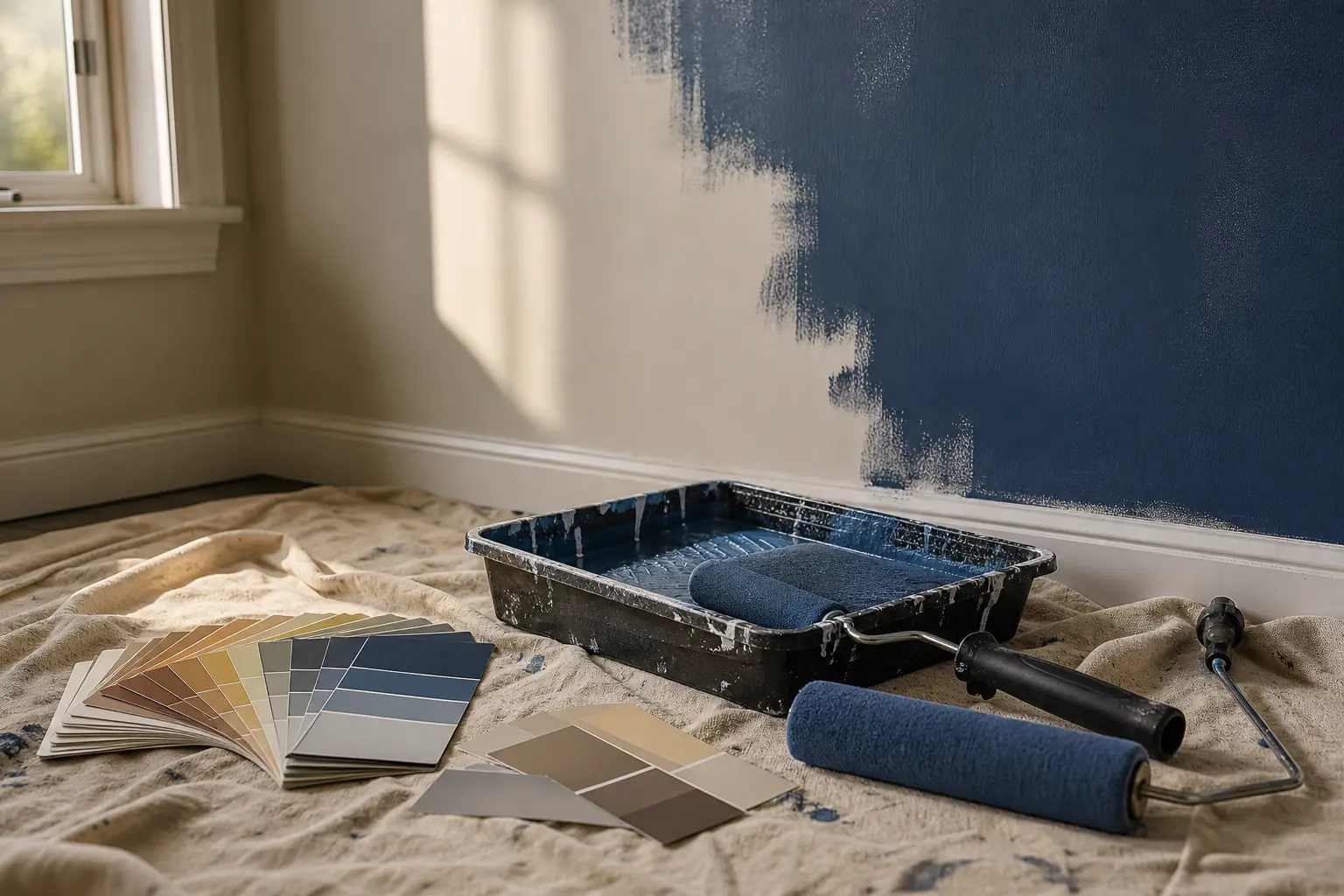
Interior painting in Brentwood looks simple, but the paint going on is the shortest part. Most of the work is getting the surface ready: filling holes, repairing cracks, sanding smooth, caulking gaps, cleaning and masking. Paint shows every flaw underneath it, and a glossy finish shows more than a flat one. A careful prep is what separates a finish that looks good for years from one that looks tired in months.
N. Abeyta Remodels is a licensed and insured remodeler based in Brentwood. We paint single rooms, whole interiors and house exteriors, on their own or as the last step of a remodel.
What good prep includes
These steps happen before any color goes on, and each one prevents a specific failure.
- Patching and repairNail holes, dings and cracks are filled and sanded flush. Damaged drywall may need real repair first. See our drywall services.
- CleaningGrease in kitchens, soap film in bathrooms and household dust keep paint from bonding. Surfaces are cleaned so the coating grips.
- CaulkingGaps along trim, casings and corners are sealed so lines look crisp and the finish does not crack open at the joint.
- Masking and protectionFloors, cabinets, hardware and furniture are covered. Good masking is what gives clean edges and a clean house when the job is done.
- PrimingNew drywall, patches, stains and bare wood are sealed so the topcoat dries evenly and stains do not bleed through.
Why primer matters
Primer does three jobs. It seals porous surfaces so they absorb paint evenly, it blocks stains that would otherwise show through, and it gives the topcoat something to grip. Skip it on fresh drywall and the joint compound and paper absorb paint at different rates. The wall dries blotchy, a defect painters call flashing, and the patches show through no matter how many coats you add.
Not every wall needs primer. A clean, sound wall repainted in a similar color often does not. Water stains, smoke, marker and big color changes usually do. We tell you which areas need it so you pay for it only where it matters.
Sheen, trim and cutting in
Sheen is how much light a finish reflects. Flatter finishes hide surface flaws and suit ceilings and low-traffic rooms. Glossier finishes resist scuffs and wipe clean, which suits trim, doors, kitchens and bathrooms, but they show every bump in the wall. Choosing the sheen for the room and the condition of the wall is as important as choosing the color.
Trim and doors are usually painted in a harder, glossier finish than the walls. They take the most contact, and a smooth, even coat on casings and baseboards is a big part of how a room looks finished.
Cutting in means painting the edges by brush where walls meet ceilings, trim and corners before rolling the open areas. A steady hand and good masking give a straight line, and that line is the first thing a visitor's eye finds.
Exterior painting
Exterior paint has a different job. It protects the siding and trim from sun, moisture and temperature swings, and it looks good while doing it. The same rule applies: prep decides the result. That means washing, scraping loose paint, repairing rot or damaged boards, sealing gaps and priming bare areas before the finish coat. Painting over peeling paint or soft wood only hides the problem for a short time.
The condition of the surface, the type of siding and the weather all affect when and how exterior work is done. If the siding itself needs repair or replacement, that comes first. See our exterior finishes page.
Where painting fits in a remodel
Painting is a finish trade, so it goes late. The usual order is to finish drywall, prime, install trim, paint, then install fixtures and hardware. In a kitchen or bathroom, cabinets, tile and flooring all need to be protected during the final coats, or touched up after.
- Drywall finished and sanded. Surfaces are smooth and dust is cleaned off.
- Primer. Walls and ceilings are sealed.
- Trim and doors. Casings and baseboards are set, caulked and painted.
- Final wall coats. Applied after the dusty and heavy work is done.
- Fixtures and touch-ups. Switch plates, lights and hardware go back on and small marks are fixed.
Painting a room before the other trades finish usually means painting it twice. We schedule the paint so that does not happen. If new floors are part of the job, see our flooring installation page for how the two are sequenced.
What affects the price and the schedule
The condition of the surfaces matters more than the size of the room. Smooth walls in good shape go quickly. Cracked plaster, old peeling paint, high ceilings, stairwells, lots of trim and heavy furniture all add time. Dark-to-light color changes need more coats. Exteriors depend on height, access, siding type and repairs. Weather also controls exterior scheduling. We look at the actual walls at a free estimate, and we do not guess at a number from a room count.
Permits and older homes
Painting usually does not need a permit. In homes built before the late 1970s, paint may contain lead, and disturbing it by sanding or scraping can trigger special lead-safe work rules. If your home is older, tell us. We will ask about its age at the estimate and plan accordingly.
Where we work
We paint homes in Brentwood, Oakley, Antioch and Walnut Creek, and across the East Bay. Painting often finishes a bathroom remodel or a kitchen, and we handle it as part of the same project.
Painting questions
Why does painting cost more than the paint?
Most of the work is preparation: moving or covering things, patching, sanding, caulking, priming and masking. That is also what makes the finish last. Paint on a poorly prepped wall peels, flashes or shows every flaw.
Do I need primer?
Often, yes. New drywall, patches, stains, bare wood and big color changes usually need primer. Walls in good condition with a similar color may not. We tell you which surfaces need it.
What sheen should I choose?
Flatter sheens hide wall flaws and suit ceilings and low-traffic rooms. Glossier sheens wipe clean and suit trim, doors, kitchens and bathrooms. We help you match sheen to the room and its condition.
Should I paint before or after a remodel?
Final paint goes on near the end, after drywall, trim and heavy work, so it is not damaged. Primer goes on earlier. We plan the coats in the remodel schedule.
Can you paint the outside of my house?
Yes. Exterior work depends on the siding, the condition of the surface and the weather, so we look at the house first and explain what prep it needs.
Which areas do you serve?
Brentwood, Oakley, Antioch, Concord, Pleasant Hill, Walnut Creek, Alamo, Danville, San Ramon, Pleasanton, Livermore, Tracy and Discovery Bay.
Ready to repaint?
Free estimates for homeowners in Brentwood and the East Bay.