
Table of Contents
- What Small Home Repair Services Include
- Why Professional Small Home Repair Services Matter
- Home Repair Contractor Vetting Checklist
- Understanding Handyman Hourly Rates and Pricing
- Remodeling Project Warranty Explained
- DIY vs. Professional Repair: When to Call a Pro
- How to Get Started With Your Home Repair Project
- Frequently Asked Questions
Last Updated: September 1, 2026
What Small Home Repair Services Include
Small home repair services address maintenance and improvement tasks that keep residential properties functioning and looking their best. These services cover fixture replacements, drywall repairs, interior and exterior painting, minor plumbing and electrical work, and carpentry projects, work that falls between routine maintenance and full-scale renovations.
At N. Abeyta Remodels, we understand that homeowners often face unexpected repairs or want to refresh specific areas without committing to a complete overhaul. Our team handles these smaller projects with the same precision we bring to full remodels. Whether it’s installing new doors, assembling cabinets, pressure washing exterior surfaces, or tackling trim carpentry, we treat every job as an opportunity to deliver quality workmanship.
The key to maximizing value from small home repair services is addressing issues promptly. A small drywall crack or paint touch-up today prevents larger problems down the road. Preventative maintenance through regular small repairs extends your home’s lifespan and maintains property value.
Why Professional Small Home Repair Services Matter
Attempting DIY repairs on every household issue can lead to costly mistakes, safety hazards, and wasted time. Professional small home repair services deliver expertise, efficiency, and reliability that most homeowners cannot achieve alone. When you hire a licensed and insured professional, you’re investing in work that meets safety standards and building codes specific to your area.
Professional contractors bring years of experience to seemingly simple tasks. Installing a ceiling fan, repairing drywall, or fixing a leaky faucet often involves hidden complexities. A professional diagnoses the root cause of a problem, not just the symptom, preventing repeat failures and saving money over time.
Safety is critical. Electrical work, plumbing modifications, and structural repairs pose serious risks if done incorrectly. Licensed professionals carry liability insurance, follow established safety protocols, and understand local building codes and permit requirements, ensuring your repairs comply with regulations and won’t create issues during a future home sale or insurance claim.
Time efficiency matters too. A professional completes in hours what might take an amateur days or weeks, minimizing household disruption and getting your home back to normal quickly.
Professional home repair services protect your investment, ensure safety compliance, and deliver results faster than DIY approaches. The cost of hiring a professional is often less than the expense of fixing mistakes made during amateur attempts.
Home Repair Contractor Vetting Checklist
Selecting the right contractor requires careful evaluation. A thorough vetting process protects you from unreliable service providers and ensures quality workmanship.

Licensing and Insurance Verification
Confirm that your contractor holds a valid general contractor or handyman license appropriate to your state and the type of work required (ncarb.org). Request proof of liability insurance and workers’ compensation coverage. Verify these credentials directly with your state’s licensing board rather than relying solely on what the contractor provides.
References and Past Work
Ask for at least three recent references from customers in your area. Contact these references and ask specific questions about reliability, communication, quality of work, and whether projects stayed on schedule and budget. Request photos of completed projects or ask if you can visit a recent job site.
Clear Written Estimates
Obtain detailed written estimates from at least two contractors. A comprehensive estimate breaks down labor, materials, timeline, and payment terms. It should specify exactly what work will be performed and what’s excluded. Compare what’s actually included in each estimate rather than choosing the lowest bid.
Communication and Professionalism
Evaluate how the contractor communicates during the initial consultation. Are they responsive to your questions? Do they explain their process clearly? Professional contractors take time to understand your needs and provide clear answers.
Payment Terms and Guarantees
Understand the payment schedule before work begins. Reputable contractors typically request a deposit (usually 25-50% of the project cost) with the balance due upon completion (bbb.org). Avoid contractors who demand full payment upfront. Ask about warranties on labor and materials. A one-year labor warranty is standard for quality work.
Red Flags to Avoid
Watch for contractors who pressure you into immediate decisions, demand cash-only payments, lack proper licensing, can’t provide references, or quote significantly lower prices without explanation. Contractors who door-knock or pressure you to sign contracts on the spot are particularly risky.
Understanding Handyman Hourly Rates and Pricing
Handyman pricing varies based on complexity, location, materials, and the contractor’s experience level. Many contractors charge hourly rates, project-based fees, or a combination of both.
Hourly rates typically range based on the type of work and local market conditions. Most contractors establish a minimum charge, commonly two to four hours, to cover travel time, setup, and administrative costs. A quick 30-minute job often costs as much as a two-hour job.
Project-based pricing offers predictability. The contractor estimates the full scope of work and quotes a flat fee. This approach works well for well-defined projects where the scope is clear and unlikely to change.
Material costs are typically billed separately from labor. The contractor purchases materials at wholesale rates and either bills you at cost or adds a markup (usually 10-20%) to cover ordering, handling, and waste. Always clarify whether your estimate includes materials or if they’ll be added later.
Avoid contractors who quote vague hourly rates without specifying what’s included or what minimum charges apply. Request a detailed breakdown of labor costs, material costs, and any additional fees before work begins.
Seasonal demand affects pricing. Spring and summer are peak seasons, and contractors may charge premium rates or have longer wait times. Off-season projects in fall and winter sometimes qualify for discounts.
Remodeling Project Warranty Explained
A remodeling project warranty protects your investment and defines the contractor’s responsibility for the work performed. Understanding warranty terms before signing a contract prevents misunderstandings and disputes later.
Types of Warranties
Labor warranties cover defects in the contractor’s work. A typical labor warranty runs for one year from project completion (nari.org). If something the contractor installed fails due to poor workmanship during that period, the contractor repairs or replaces it at no cost. Material warranties, provided by manufacturers, cover defects in products themselves and vary by product, paint typically carries a five to ten-year warranty, while fixtures and appliances range from one to ten years.
What Warranties Typically Cover
Labor warranties cover workmanship defects: improper installation, poor finishing, structural issues caused by the contractor’s work, and failure of components the contractor installed. They do NOT cover normal wear and tear, damage from accidents or misuse, or issues caused by homeowner neglect or modifications after completion.
Material warranties cover manufacturing defects in products used during the project. If a faucet leaks due to a manufacturing flaw, the manufacturer replaces it.
What Warranties Don’t Cover
Warranties exclude damage from accidents, misuse, or environmental factors beyond the contractor’s control. They don’t cover modifications the homeowner makes after project completion or issues caused by third parties or natural disasters.
Warranty Documentation
A professional contractor provides written warranty documentation before work begins, specifying the warranty period, what’s covered, exclusions, and how to file a claim. Keep this documentation in a safe place.
Extended Warranties
Some contractors offer extended warranties beyond the standard one-year labor warranty. Extended warranties make sense for major projects where you want long-term peace of mind.
DIY vs. Professional Repair: When to Call a Pro
The decision between tackling a home repair yourself or hiring a professional depends on complexity, safety risk, tools required, time available, and your skill level.
When DIY Makes Sense
Simple cosmetic projects with low risk are good DIY candidates. Painting a bedroom wall, assembling basic furniture, or caulking gaps around trim are straightforward tasks where mistakes are easily corrected. Seasonal maintenance tasks like gutter cleaning, filter replacement, or basic landscaping work are appropriate for DIY if you’re comfortable with heights and basic safety practices.
When Professional Help Is Essential
Electrical work beyond changing outlets or light fixtures should go to licensed electricians. Improper electrical work creates fire and shock hazards, and building codes require licensed electricians for most electrical modifications.
Plumbing work involving main lines, sewage systems, or structural modifications requires professionals. Incorrect plumbing work leads to water damage, mold, and costly repairs.
Structural repairs affecting walls, foundations, roofing, or load-bearing elements require professional assessment and work. These repairs impact home safety and structural integrity. Gas line work is never DIY territory, only licensed professionals should handle gas line repairs or installations.
The Cost-Benefit Analysis
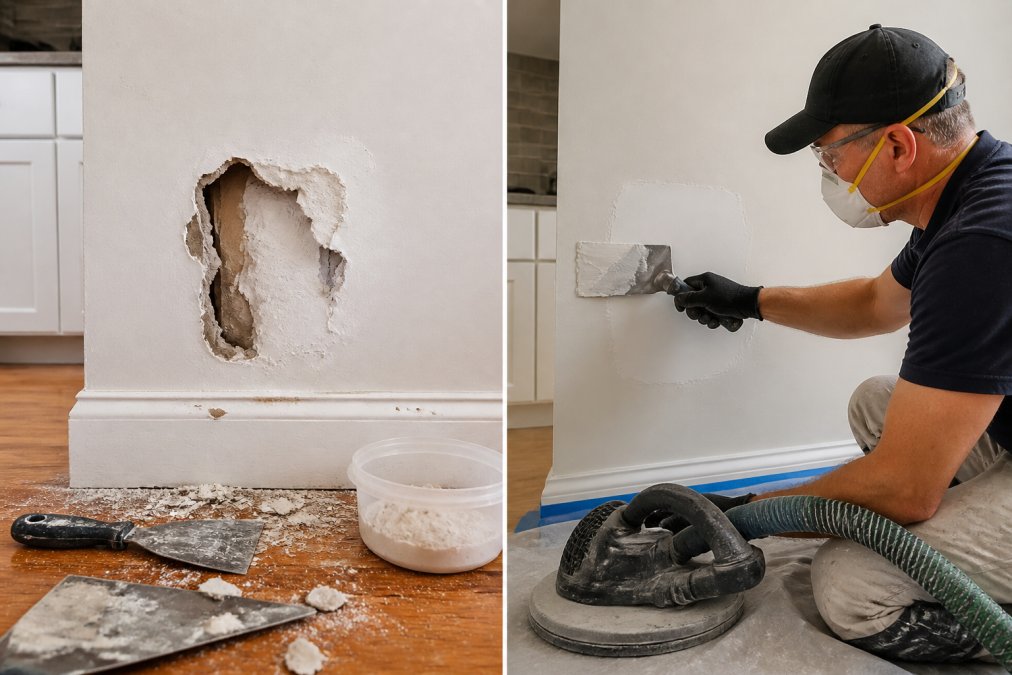
Consider the true cost of DIY mistakes. A botched drywall repair might require professional correction, costing more than hiring a professional initially. A plumbing mistake can lead to water damage totaling thousands of dollars. The potential cost of fixing mistakes often exceeds the professional’s original quote.
Time is another factor. If a professional completes a three-day project in one day, the labor savings might offset the service cost. If you have limited free time, hiring a professional minimizes household disruption.
Hire a professional for electrical work, plumbing modifications, structural repairs, gas line work, and any project where mistakes create safety hazards or substantial financial risk. Handle basic cosmetic work, seasonal maintenance, and simple replacements yourself if you have the skill and time.
How to Get Started With Your Home Repair Project
Starting a home repair project successfully requires planning, clear communication, and realistic expectations.
Step 1: Define Your Needs Clearly
Before contacting contractors, identify exactly what needs repair or improvement. Take photos of problem areas and write down specific issues. This clarity helps contractors provide accurate estimates and prevents scope creep during the project.
Step 2: Research Local Contractors
Search for licensed contractors in your area with experience in your specific repair type. Check online reviews on multiple platforms, verify licensing through your state’s contractor board, and ask for recommendations from friends and family.
Step 3: Request Detailed Estimates
Contact your top candidates and request written estimates. Provide photos, measurements, and a detailed description of the work. Ask them to include labor costs, material costs, timeline, and payment terms.
Step 4: Compare and Decide
Review estimates side by side. Don’t automatically choose the lowest price; compare what’s included in each estimate. Consider the contractor’s communication style, professionalism, references, and warranty offerings.
Step 5: Finalize the Contract
Review and sign a detailed contract before work begins. The contract should specify the scope of work, materials to be used, timeline, payment schedule, warranty terms, and how changes to the scope will be handled.
Step 6: Prepare Your Home
Clear the work area of personal items, protect furniture and flooring, and arrange for any necessary access. Discuss with the contractor how they’ll minimize disruption, dust control, noise levels, and daily cleanup expectations.
Step 7: Communicate During the Project
Stay in regular contact with the contractor. Address concerns or changes promptly. Most projects proceed smoothly when communication is clear and expectations are aligned.
Step 8: Final Walkthrough and Payment
Before making final payment, conduct a thorough walkthrough with the contractor. Verify that all work meets the contract specifications and your expectations. Request written confirmation that the warranty period has begun.
N. Abeyta Remodels specializes in guiding homeowners through this entire process. Our team manages every detail from initial consultation through final walkthrough, ensuring clear communication, on-time delivery, and results that exceed expectations. With decades of experience and a commitment to precision craftsmanship, we handle projects ranging from small home repair services to full kitchen and bathroom remodels without shortcuts or compromises.
Getting your home repair project started doesn’t have to be stressful. The right contractor makes all the difference, someone who listens to your needs, communicates clearly, and delivers quality work on schedule. N. Abeyta Remodels brings decades of experience, licensed and insured professionals, and a proven track record of stress-free project management to every job. Need a free estimate? Contact our team today for a detailed consultation and transparent quote on your next home repair or remodeling project.
Frequently Asked Questions
How much should I pay my handyman per hour?
Handyman hourly rates vary based on the type of work, your location, and the contractor’s experience. Always request a free estimate before committing to work, and ask if the contractor offers flat-rate pricing for specific projects as an alternative to hourly billing.
What are red flags when hiring a home repair contractor?
Watch for contractors who won’t provide references, lack proper licensing or insurance, pressure you to pay upfront in full, or avoid putting estimates in writing. Be wary of those who can’t clearly explain the scope of work or timeline. Avoid contractors who seem dismissive of your concerns or won’t answer questions about their experience with similar projects. Always verify licensing through your state’s contractor board before hiring.
What should I ask before hiring a home repair contractor?
Ask about their licensing, insurance, and bonding status. Request references from recent projects and examples of similar work. Clarify the project timeline, payment schedule, and warranty coverage. Ask how they handle unexpected issues or changes to the scope. Confirm whether they obtain necessary permits and what happens if work isn’t completed on schedule. Get everything in writing, including the detailed estimate, scope of work, and payment terms.
Are small home repair services required to be licensed?
Licensing requirements depend on the type of work and your state. General contractors, electricians, and plumbers typically must be licensed. Handymen performing minor repairs may not require licensing for small jobs, but it varies by state and project scope. Always verify that any contractor performing work in your home holds the appropriate licenses for their trade. Licensed professionals are required to carry insurance, which protects you if something goes wrong during the project.
This article was written using GrandRanker