
Table of Contents
- What a Remodeling Project Warranty Actually Covers
- Contractor Workmanship Warranty vs. Manufacturer Warranty
- Typical Home Renovation Warranty Length by Project Type
- What Voids a Contractor Warranty
- How to Document Remodeling Project Defects
- Warranty Insurance vs. Contractor-Backed Warranties
- Protecting Your Remodeling Warranty from Start to Finish
- Conclusion
Last Updated: August 20, 2026
What a Remodeling Project Warranty Actually Covers
A remodeling project warranty is a legally enforceable promise from your contractor that the work meets agreed-upon standards and that defects discovered after completion will be remedied at no additional cost. Understanding what a warranty covers before signing is one of the most important steps to protect your investment.

Most renovation warranties fall into two categories: coverage for the contractor’s workmanship and coverage for the materials installed. Your contractor controls how the work is performed; the manufacturer controls how the product holds up. Both matter, but they are governed by entirely different agreements.
A remodeling project warranty also addresses latent defects, problems not visible at completion but surfacing over time due to faulty installation or substandard materials. Water intrusion behind a newly tiled shower wall is a classic example. A well-written warranty covers exactly this scenario.
According to the Federal Trade Commission’s guidance on warranties, written warranties must clearly state what is covered, the duration of coverage, and the process for making a claim.
Express Warranties vs. Implied Warranties
An express warranty is a written or verbal commitment made explicitly by the contractor, stating specific coverage terms, duration, and remedies. This is what you negotiate before work begins and what gets written into your contract.
An implied warranty exists automatically under state law even when no written warranty is provided. Most states recognize an implied warranty of habitability and an implied warranty of workmanship, which require that residential construction meet minimum building codes and professional standards.
The critical point: implied warranties are a legal floor, not a ceiling. A strong express warranty in your written contract will always provide better, more specific protection than relying on implied warranties alone.
The 1-2-10 Warranty Structure
The 1-2-10 warranty structure is a widely recognized framework in residential construction that assigns different coverage periods to different defect categories.
| Coverage Category | Duration | What It Covers |
|---|---|---|
| Workmanship defects | 1 year | Cosmetic issues, installation errors, finish quality |
| Mechanical systems | 2 years | HVAC, plumbing, electrical systems |
| Structural defects | 10 years | Foundation, load-bearing walls, structural integrity |
Not every remodeling contractor offers a formal 1-2-10 warranty. For renovation work, coverage periods vary significantly. Knowing this structure helps you benchmark what you are being offered against a recognized standard.
Contractor Workmanship Warranty vs. Manufacturer Warranty
These two warranty types operate completely independently.
A contractor workmanship warranty covers how the work was done. If your new kitchen backsplash tiles start separating from the wall because the installer used the wrong adhesive or skipped proper surface preparation, your general contractor is liable.
A manufacturer warranty covers the product itself. If those same tiles crack because of an inherent material defect unrelated to installation, the claim goes to the tile manufacturer, not your contractor.
Many product failures are actually installation failures in disguise. A manufacturer will frequently deny a warranty claim by arguing that improper installation voided their coverage. This is why choosing a contractor who follows manufacturer-specified installation procedures matters.
Subcontractor work adds another layer. When your general contractor brings in a specialty subcontractor for electrical or plumbing work, the question of who backs the workmanship warranty must be answered in writing before work starts. In most cases, the general contractor remains your single point of contact and assumes responsibility for subcontractor performance.
Before signing any contract, ask your contractor directly: “If a subcontractor’s work fails, who is responsible for the warranty claim?” The answer should always be the general contractor. If they deflect that responsibility, treat it as a red flag.
Typical Home Renovation Warranty Length by Project Type
Warranty length in renovation work is not standardized. Coverage periods vary by trade, material type, and what individual contractors are willing to commit to in writing.
| Project Type | Typical Workmanship Warranty | Notes |
|---|---|---|
| Kitchen remodel | 1-2 years | Covers installation, cabinetry fitting, countertop seams |
| Bathroom renovation | 1-2 years | Waterproofing and tile work often warrant closer scrutiny |
| Roofing | 2-5 years (workmanship) | Manufacturer warranty on materials is separate, often 20-50 years |
| Flooring installation | 1-2 years | Acclimation failures and subfloor prep issues are common claims |
| Structural work | Up to 10 years | Load-bearing alterations carry longer liability exposure |
| Painting and finishes | 1 year | Peeling, adhesion failures within the first year are typically covered |
The statute of repose and the statute of limitations are not the same thing, and both affect your ability to pursue a warranty claim. The statute of limitations sets the window within which you can file a lawsuit after discovering a defect. The statute of repose sets an absolute deadline from the project completion date, regardless of when the defect is discovered. As noted by the American Bar Association’s construction law resources, statutes of repose in construction typically range from six to ten years depending on the state. Once that window closes, no claim is possible, even for a latent defect you could not have discovered earlier.
Know both deadlines in your state.
What Voids a Contractor Warranty
Several common actions void coverage entirely.
Unauthorized modifications. If you hire a different contractor to alter work covered under your original warranty, the original contractor’s obligation for that scope evaporates.
Failure to maintain. Warranties carry maintenance obligations. A bathroom exhaust fan that fails because it was never cleaned, or grout that deteriorates because it was never sealed, are not warranty claims.
Misuse or abuse. Using a space or installation in a way that exceeds its intended purpose can void coverage. Overloading kitchen cabinetry beyond rated capacity is one example.
DIY repairs. Attempting to fix a covered defect yourself, rather than reporting it to the contractor, typically voids the warranty for that item. The contractor loses the opportunity to assess and remedy the problem.
Ignoring building codes. If a homeowner adds unpermitted work adjacent to or connected with the warranted scope, contractors can argue that the code violation compromised their original work.
Attempting a DIY repair on a defect before contacting your contractor is one of the fastest ways to void your warranty. Document the problem first, then call.
How to Document Remodeling Project Defects
Documentation is the difference between a warranty claim that gets resolved quickly and one that turns into a dispute.
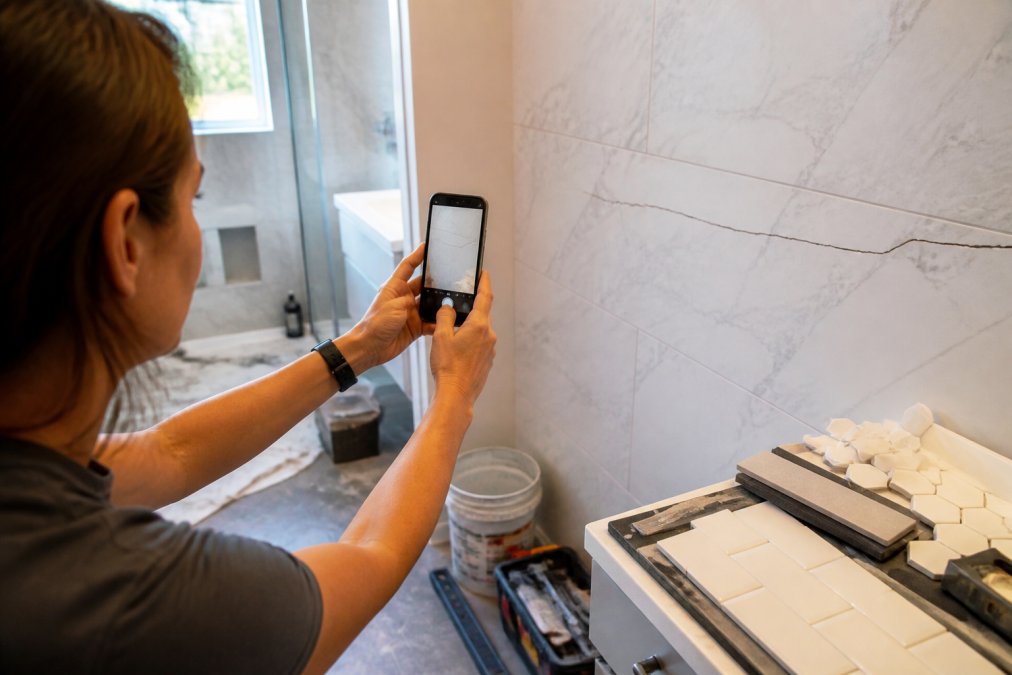
Start documenting before the project is even finished. Photograph every phase of work, including rough-in stages that will be covered by walls or flooring. These images become critical evidence if a latent defect surfaces later.
After project completion, do a thorough walkthrough and note every item that does not meet the agreed project specifications. Be specific: "Tile grout looks uneven in the northwest corner of the shower, approximately 18 inches from the floor" is useful documentation. "Bathroom looks off" is not.
A practical defect documentation checklist:
- Photograph the defect from multiple angles, including a wide shot showing location context
- Measure and record the defect’s dimensions or extent
- Note the date you first observed the problem
- Write a clear description of what you see, without speculation about cause
- Save all original contract documents, change orders, and correspondence
- Keep a timestamped log of all communications with the contractor about the defect
- Store copies in at least two locations (cloud storage and a physical backup)
Cloud-stored, timestamped photographs are far more defensible than printed photos with no metadata. Apps designed for project management and punch-list tracking can create an organized, dated record that holds up well if a dispute escalates. According to the National Association of Home Builders’ guidance on construction documentation, thorough records from the start of a project are among the most effective tools homeowners have in warranty disputes.
Warranty Insurance vs. Contractor-Backed Warranties
Most homeowners assume their contractor’s promise is the only warranty protection available. There is a second option that many renovation guides overlook.
Contractor-backed warranties are the most common form. The contractor personally guarantees the work. If a defect arises, you contact them and they remedy it. The obvious risk: if the contractor goes out of business or refuses to respond, your warranty is effectively worthless.
Warranty insurance, sometimes called third-party warranty insurance, transfers the risk to an insurance carrier. Even if the original contractor is no longer operating, the insurance policy remains in force. Claims are handled through the insurer, not the contractor.
| Factor | Contractor-Backed Warranty | Warranty Insurance |
|---|---|---|
| Backed by | Contractor’s business | Insurance carrier |
| Survives contractor closure | No | Yes |
| Transferable to new owner | Rarely | Often |
| Cost to homeowner | Typically included | May add a premium |
| Claim process | Direct to contractor | Through insurer |
For large-scale renovations, asking whether a contractor carries third-party warranty insurance is a reasonable due diligence question. A transferable warranty backed by an insurer also adds real value to a home if you plan to sell.
Protecting Your Remodeling Warranty from Start to Finish
A remodeling project warranty is only as strong as the written agreement behind it. Verbal commitments are nearly impossible to enforce.
What Your Written Contract Must Include
Every renovation contract should contain these warranty-related provisions before you authorize work to begin:
- Explicit warranty duration for workmanship, broken down by trade or scope if different periods apply
- Clear definition of covered defects versus excluded conditions
- Warranty exclusions stated plainly, including maintenance obligations and modification restrictions
- Subcontractor warranty responsibility specifying that the general contractor remains liable for all work performed under their contract
- Claim notification requirements such as written notice within a specific number of days of discovering a defect
- Remedy process describing how defects will be assessed and corrected, and within what timeframe
- Dispute resolution process specifying whether disputes go to mediation, arbitration, or litigation
Missing any of these elements creates ambiguity that benefits the contractor in a dispute, not you.
How to File a Warranty Claim and Resolve Disputes
Filing a warranty claim effectively follows a clear sequence.
- Document the defect thoroughly before contacting anyone
- Submit written notice to the contractor via email or certified mail, describing the defect and the date of discovery
- Allow reasonable access for the contractor to inspect the defect within the timeframe specified in your contract
- Get the proposed remedy in writing before any repair work begins
- Confirm completion of the remedy in writing, and document the finished repair with photographs
If the contractor disputes the claim or fails to respond, escalation options include:
- Mediation: A neutral third party facilitates a negotiated resolution.
- Arbitration: A binding decision from a neutral arbitrator.
- State contractor licensing board: Filing a complaint can prompt action and becomes part of the public record.
- Civil litigation: A last resort, but available when other remedies fail.
The most effective warranty dispute resolution happens before a dispute exists. A contract with clear claim procedures, a contractor with a documented track record, and thorough records from your end eliminate most conflicts before they escalate.
Clear communication from contract signing through final walkthrough is the foundation of a warranty that actually holds up.
For homeowners who want to understand their rights more broadly, the Consumer Financial Protection Bureau’s homeowner resources covers contractor agreements and dispute resolution options in plain language.
Warranty disputes are stressful, expensive, and almost always avoidable with the right contractor and the right contract from day one. N. Abeyta Remodels is a licensed and insured team with decades of experience managing full-scale kitchen and bathroom renovations from start to finish, with no shortcuts at any stage. Every project comes with clear written agreements, defined workmanship standards, and a commitment to on-time delivery that holds throughout the life of your project. Need a free estimate? Contact N. Abeyta Remodels and get the clarity your renovation deserves.
Frequently Asked Questions
Q: What is the standard warranty period for home remodeling projects?
A: Most remodeling warranties follow a tiered structure: one year for workmanship defects, two years for mechanical systems like plumbing and electrical, and ten years for structural defects. The exact coverage period depends on your written contract and your state's statute of repose, which sets the outer deadline for filing construction defect claims. Always confirm the specific terms in writing before work begins.
Q: What is the difference between a workmanship warranty and a manufacturer warranty?
A: A workmanship warranty is a contractual assurance from your contractor covering defects caused by how the work was performed, poor installation, code violations, or substandard techniques. A manufacturer warranty covers defects in the materials themselves, such as a faulty tile batch or a defective fixture. These are separate obligations. If a cabinet door warps due to a manufacturing flaw, the manufacturer is liable; if it was hung incorrectly, the contractor is.
Q: What is typically excluded from a home remodeling warranty?
A: Common warranty exclusions include damage from homeowner neglect, unauthorized modifications made after project completion, normal wear and tear, and pre-existing conditions the contractor documented before starting. DIY repairs attempted on covered work almost always void the warranty. Damage caused by extreme weather events or acts outside the contractor's control are also typically excluded. Review your written agreement carefully to understand every exclusion before signing.
Q: What are common red flags in a contractor's warranty document?
A: Watch for vague language like 'defects at our discretion,' unusually short coverage periods under 90 days for workmanship, and clauses that require you to use only the contractor's repair crew with no dispute resolution path. A warranty that excludes subcontractor work is also a concern, since most renovation projects involve subcontractors. Any warranty offered only verbally, with nothing in the written contract, provides no legally enforceable protection.
This article was written using GrandRanker