
Table of Contents
- Why Schedule a Home Renovation Consultation
- Home Renovation Consultation Checklist: What to Prepare
- Questions to Ask Home Renovation Contractors During Your Consultation
- Remodeling Project Warranty Explained: What You Should Expect
- What Happens During Your Consultation: The Process Step-by-Step
- How to Evaluate Contractor Fit for Your Project
- Red Flags to Watch During the Consultation
- Next Steps: From Consultation to Project Kickoff
Last Updated: August 24, 2026
Why Schedule a Home Renovation Consultation
A home renovation consultation is your first critical step toward transforming your space. It’s where you meet with a licensed contractor, discuss your vision, understand what’s possible within your budget, and determine whether you’re working with someone who can deliver. Many homeowners skip this step or treat it casually, assuming they know what they want and just need a price quote. That’s where problems start.
A genuine home renovation consultation isn’t a sales pitch, it’s a diagnostic process. A qualified contractor should ask detailed questions about your lifestyle, pain points, timeline, and budget. They should measure your space, identify structural issues, and discuss utilities, permits, and building codes. A contractor who rushes through a 15-minute walkthrough and throws out a number isn’t doing their job. One who spends an hour asking questions, taking notes, and discussing trade-offs is worth considering.
Before your consultation, take photos of the space from multiple angles and write down three specific problems you want solved. This gives the contractor concrete starting points instead of vague impressions.
Home Renovation Consultation Checklist: What to Prepare
Showing up prepared makes the meeting more productive and signals to the contractor that you’re serious.
Documentation and measurements. Gather any existing blueprints, floor plans, or permits from previous work. If you don’t have these, measure the space yourself (length, width, height, door/window locations). Take photos from multiple angles, overhead, close-ups of problem areas, and wide shots of the entire room. Note the location of plumbing and electrical lines if you know them.
Budget and timeline. Write down a realistic budget range and your ideal timeline. If you’re unsure about budget, be honest, a good contractor will help you understand what’s possible at different price points. Specify when you need the project completed and how long you can tolerate disruption.
List of priorities and pain points. Write down three to five specific things you want the renovation to accomplish. Instead of "make it look nicer," write "add more counter space" or "fix the leaking cabinet." Include any recurring problems that need addressing.
Reference materials. Collect images of designs, finishes, or layouts you like. Pinterest boards, magazine clippings, or photos from friends’ homes help a contractor understand your aesthetic preferences.
Questions written down. Jot down your questions before the meeting so you don’t forget them in conversation.
Preparation demonstrates you’re a serious client and gives the contractor real information to work with. This typically results in more accurate estimates and better project planning.
Questions to Ask Home Renovation Contractors During Your Consultation
The questions you ask during a consultation reveal whether a contractor understands your project and can deliver.
Budget and Timeline Questions
"Walk me through how you estimate costs." A good contractor should explain their process: how they calculate labor, material pricing, and contingency buffers. If they can’t explain it, they probably can’t defend it later when costs shift.
"What’s included in your estimate, and what isn’t?" Some estimates include permits, inspections, and cleanup. Others don’t. Know exactly what you’re paying for.
"What happens if we discover problems during construction?" Renovations almost always uncover hidden issues. Ask how the contractor handles these discoveries and whether there’s a contingency built into the budget.
"How do you handle change orders?" Change orders are written requests to modify the original scope. They should be documented in writing, not handled verbally.
"What’s your payment schedule?" Legitimate contractors don’t ask for full payment upfront. A typical schedule is 30-50% down, progress payments as milestones are completed, and final payment upon completion (nahb.org).
"What’s your timeline, and how firm is it?" Ask for a start date and expected completion date. Ask what could cause delays.
Licensing, Insurance, and Guarantees
"Can you show me your contractor’s license and proof of insurance?" This is non-negotiable. Ask to see the actual documents and verify the license is current.
"What’s your warranty on the work?" A remodeling project warranty should cover both labor and materials. Ask what’s covered, what’s not, and for how long. Standard warranties run one to two years.
"What happens if something goes wrong after the project is done?" Ask about your recourse if a problem emerges weeks or months later.
"Do you carry liability insurance?" This protects you if someone is injured on your property during the project.
"Can you provide references from recent projects?" Ask for at least three references from similar projects completed in the last two years. Contact these references and ask about communication, timeliness, and how problems were handled.
If a contractor can’t or won’t provide proof of licensing, insurance, or references, walk away. This is the fastest indicator that corners are being cut somewhere.
Remodeling Project Warranty Explained: What You Should Expect
A remodeling project warranty is your protection after the work is complete.
Workmanship warranty. This covers the quality of the contractor’s work, installation, assembly, and finishing. If cabinets are installed incorrectly or flooring is uneven, the contractor should fix it at no charge during the warranty period. Workmanship warranties typically run one to two years (cslb.ca.gov).
Material warranty. This covers defects in the materials themselves. Material warranties often come from the manufacturer, not the contractor. The contractor typically passes these warranties to you, but they’re not responsible for manufacturer defects.
What’s typically NOT covered. Normal wear and tear, damage from misuse, changes in material appearance due to sun exposure, and issues caused by lack of maintenance are generally excluded.
Warranty duration. One year is standard for most work. Some contractors offer two years or longer. Ask specifically how long coverage lasts and what happens if an issue emerges after the warranty expires.
Ask during your consultation what specific warranties are included and request them in writing as part of the contract.
What Happens During Your Consultation: The Process Step-by-Step
A professional home renovation consultation follows a logical sequence.
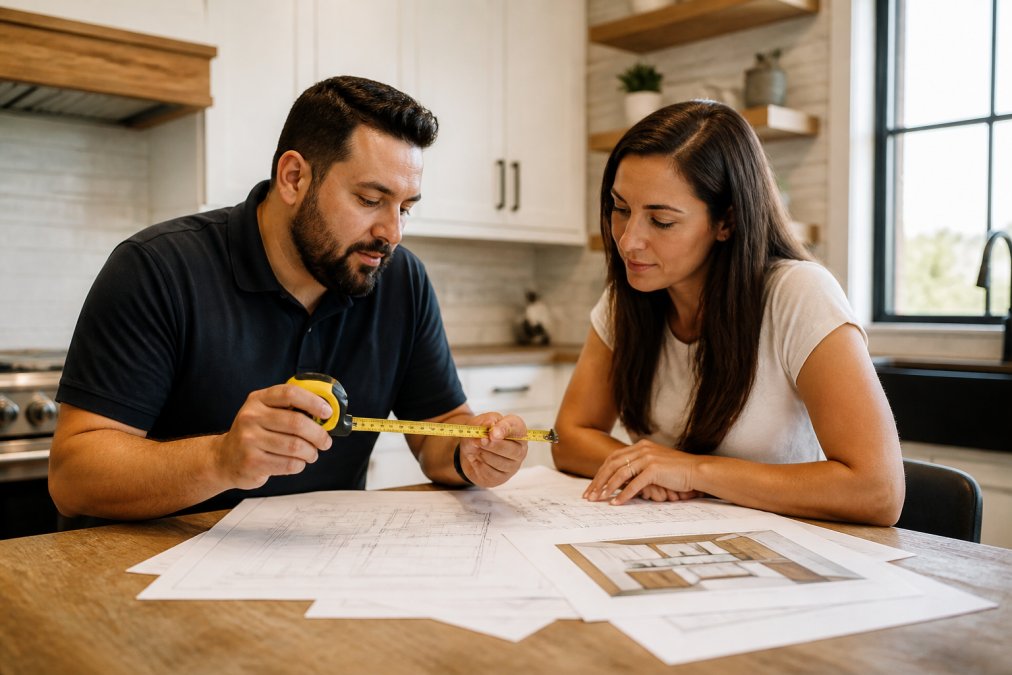
Initial walkthrough and assessment. The contractor tours the space, takes measurements, identifies structural elements, checks for damage or code violations, and assesses existing utilities. This phase typically takes 20-45 minutes depending on project complexity.
Discussion of your vision and constraints. The contractor asks about your goals, timeline, budget, lifestyle, and pain points. A good contractor listens more than they talk at this stage.
Identification of challenges and opportunities. Based on the walkthrough and your input, the contractor identifies issues that need addressing and opportunities you might not have considered.
Discussion of options and trade-offs. For most decisions, there are multiple approaches at different price points. A contractor should walk you through options and explain the trade-offs honestly.
Estimate and next steps. The contractor discusses timeline and provides a rough estimate or commits to sending a detailed estimate within a specific timeframe.
Q&A time. The contractor should leave time for your questions. If they seem rushed or dismissive, that signals how they’ll handle the project.
A thorough consultation typically takes 60-90 minutes (nahb.org).
How to Evaluate Contractor Fit for Your Project

After the consultation, evaluate whether this contractor is the right fit.
Communication style. Did the contractor listen to you or just talk about themselves? Did they explain things clearly or use jargon? During the project, you’ll communicate regularly. If communication felt difficult in a one-hour consultation, it will be worse over weeks of work.
Knowledge and expertise. Did they identify issues you hadn’t noticed? Did they offer solutions you hadn’t considered? A knowledgeable contractor adds value beyond labor.
Professionalism and reliability. Were they on time? Did they follow up when they said they would? These behaviors predict how they’ll run the actual project.
References and past work. Contact their references and ask specifically about timeliness, budget adherence, and problem-handling. Ask to see photos of recent projects and look for quality and attention to detail.
Licensing and insurance verification. Confirm their contractor’s license is current and their insurance is adequate. This isn’t negotiable.
Personality and rapport. You’ll be working with this person for weeks or months. Do you trust them? Does their work style match your preferences?
Red flags. If a contractor is evasive about references, can’t produce licensing documentation, offers a price significantly lower than others without explanation, or pressures you to decide immediately, keep looking.
Red Flags to Watch During the Consultation
Certain behaviors during a consultation predict problems later.
Pressure to decide immediately. A contractor who says "I can only hold this price until tomorrow" is using pressure tactics. Legitimate contractors understand you need time to think.
Vague or incomplete estimates. If the estimate is a single line with no breakdown of labor and materials, that’s a red flag.
Unwillingness to discuss timeline or contingencies. If a contractor refuses to discuss what happens if problems are discovered, they’re avoiding accountability.
Dismissiveness about permits or codes. Some contractors suggest you can skip permits to save money. This is illegal and signals corner-cutting elsewhere.
Lack of references or portfolio. If a contractor can’t show you past work or provide references, there’s no way to verify quality.
Poor communication or lack of clarity. If you leave confused about next steps or what’s included, communication will be a problem throughout the project.
No written proposal. Everything discussed should be documented in writing. Verbal agreements lead to disputes.
Trust your instincts. If something feels off during the consultation, it probably is. There are plenty of qualified contractors available.
Next Steps: From Consultation to Project Kickoff
After your consultation, the process moves toward a contract and project start.
Review the detailed estimate. Verify that everything discussed is included. Check that labor, materials, permits, and contingencies are all itemized. If anything is unclear, contact the contractor for clarification before signing.
Compare multiple estimates. Get estimates from at least two or three contractors. Don’t automatically choose the lowest price, compare what’s included, the timeline, experience, and your comfort level.
Check references thoroughly. Contact at least two references from recent projects and ask whether they’d hire the contractor again.
Verify licensing and insurance one final time. Before signing anything, confirm the contractor’s license is current and their insurance is active and adequate.
Review and sign the contract. The contract should include scope of work, timeline, payment schedule, warranty terms, what happens if problems are discovered, and how changes are handled. Don’t sign until you understand everything.
Schedule the pre-project meeting. Before work starts, meet with the contractor to confirm start date, discuss site access, clarify communication protocols, and address final questions.
Prepare your home. Clear the work area of personal items, arrange for pet care if needed, and plan for disruption to your routine.
Establish communication protocols. Agree on how you‘ll communicate during the project. Clear communication prevents small issues from becoming big problems.
Scheduling a home renovation consultation is the foundation of a successful project. When you approach it strategically, preparing thoroughly, asking the right questions, and evaluating contractor fit carefully, you set yourself up for a renovation that comes in on time, within budget, and exceeds your expectations. N. Abeyta Remodels has guided homeowners through this process with decades of experience, clear communication, and licensed, insured professionals who manage every detail from start to finish. Ready to move forward? Contact N. Abeyta Remodels for a free consultation and discover how professional guidance transforms your renovation from stressful to seamless.
Frequently Asked Questions
What should I prepare before a home renovation consultation?
Gather photos of your current space, measurements if available, a list of your must-haves and budget range, and any inspiration images from magazines or online. Write down specific problems you want solved, outdated fixtures, poor layout, lack of storage. Have your home's age and any previous renovation records ready. This preparation helps your contractor understand your vision and provide an accurate assessment during the consultation.
What questions should I ask during a home renovation consultation?
Ask about timeline, how they manage costs, their licensing and insurance coverage, warranty terms, and how they handle changes mid-project. Request references from recent projects in your area and ask to see before-and-after photos. Inquire about their subcontractor coordination process and communication frequency. Understanding how they handle disruption to your daily life is also critical, ask about dust control, work hours, and site cleanup procedures.
What does a remodeling project warranty typically cover?
A solid warranty covers workmanship defects, material failures, and structural issues for a specified period, often one to two years. It should address both labor and materials. Ask your contractor specifically what's included: Does it cover fixtures, plumbing, electrical work, and finishes? What's the process for filing a claim? Licensed and insured contractors typically stand behind their work with written warranties that protect you if problems arise after completion.
How long does a home renovation consultation usually take?
Most consultations last 45 minutes to two hours, depending on project scope and complexity. A full-home renovation assessment takes longer than a single-room remodel. The contractor will walk through your space, take measurements, discuss your goals, and explain the process. Allow extra time if you have multiple questions or want to review design options. N. Abeyta Remodels provides thorough consultations to ensure nothing is missed before providing an estimate.
This article was written using GrandRanker